
By Mallika Fonseca
Mallika Fonseca is a GP trainee and CGHP NHS East of England Global Health Fellow 2026. In the blog, Mallika reflects on her experience of strengthening palliative care in partner institutions and the lessons this work brings to the NHS.
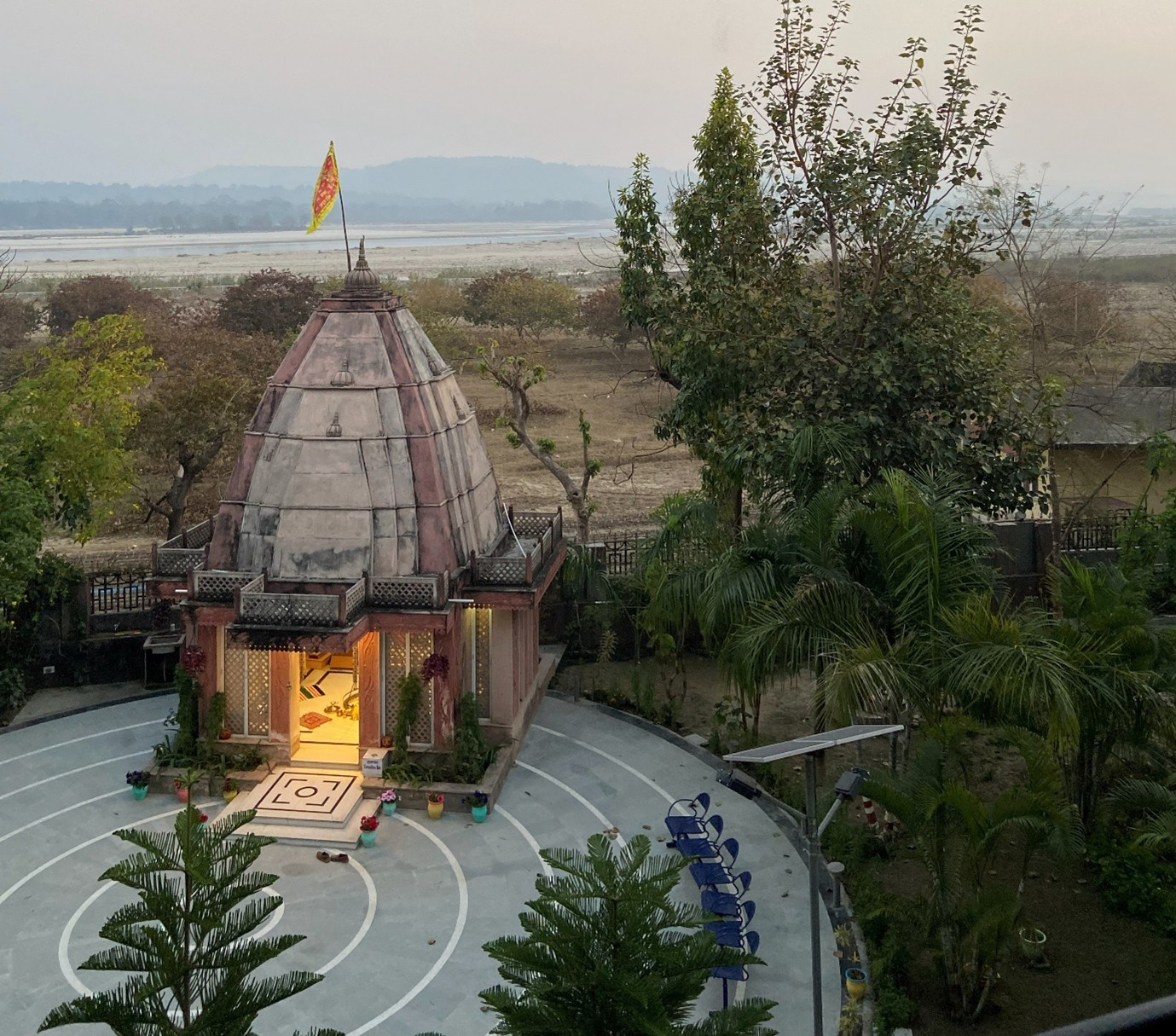
It’s straight out of a documentary. A hospice, on the banks of the river Ganges. Isolated from the rest of the world, surrounded by only fields and farms. Across the wide expanse of the rocky riverbed, through the pink dusk, rises the foothills of the Himalayas, the Sivaliks, covered by a vast expanse of jungle, only disturbed by the occasional flock of birds rising up from the trees, startled by some sudden movement in the depths of the forest below. Here, a solitary doctor and a team of nurses, works day and night, with only the presence of each other and the company of the grieving and bereaved. It sounds haunting. Depressing even. But it’s not.
Death will come. But that is an issue for tomorrow. Today, there is much to be done for the living.
As a medical student, I always assumed palliative care would be depressing. Glum. How could I ever bring myself to work in a field with so much helplessness where ‘nothing more can be done’?
But experience brings perspective – and it completely changed mine. Surgeons might be heroes and physicians might be able to do miracles. But no other medical field can offer the level of empowerment that palliative care can.
A good palliative care team can transform a situation that feels utterly out of control – where families and patients feel helpless and lost – and offer clarity. The questions are universal: ‘Why has grandma stopped eating?’, ‘Mum can’t breathe and she’s panicking – please help!’, ‘How long does Dad have left?’, ‘What is going to happen now?’ And by answering these questions, they can make the worst few days of someone’s life feel just about manageable.
That’s why the Uttarakhand-Cambridge Health Partnership makes such a difference. ‘A good palliative team.’ This cannot be done by one person. One doctor. One nurse. One carer. Just as it takes a village to raise a child, it takes a village to care for the dying with dignity.
In much of the global south, the patient’s support system often comes down to one thing: families. Families with little training, no formal support network, and limited resources. And our romanticised assumptions about extended family structures in countries like India don’t necessarily hold in the 21st century. We picture large joint families with many hands to share the burden – but social change has reshaped families worldwide. In India, just as here, it often falls to just one or two people, for whom the weight of care can become almost unbearable.
About the Partnership
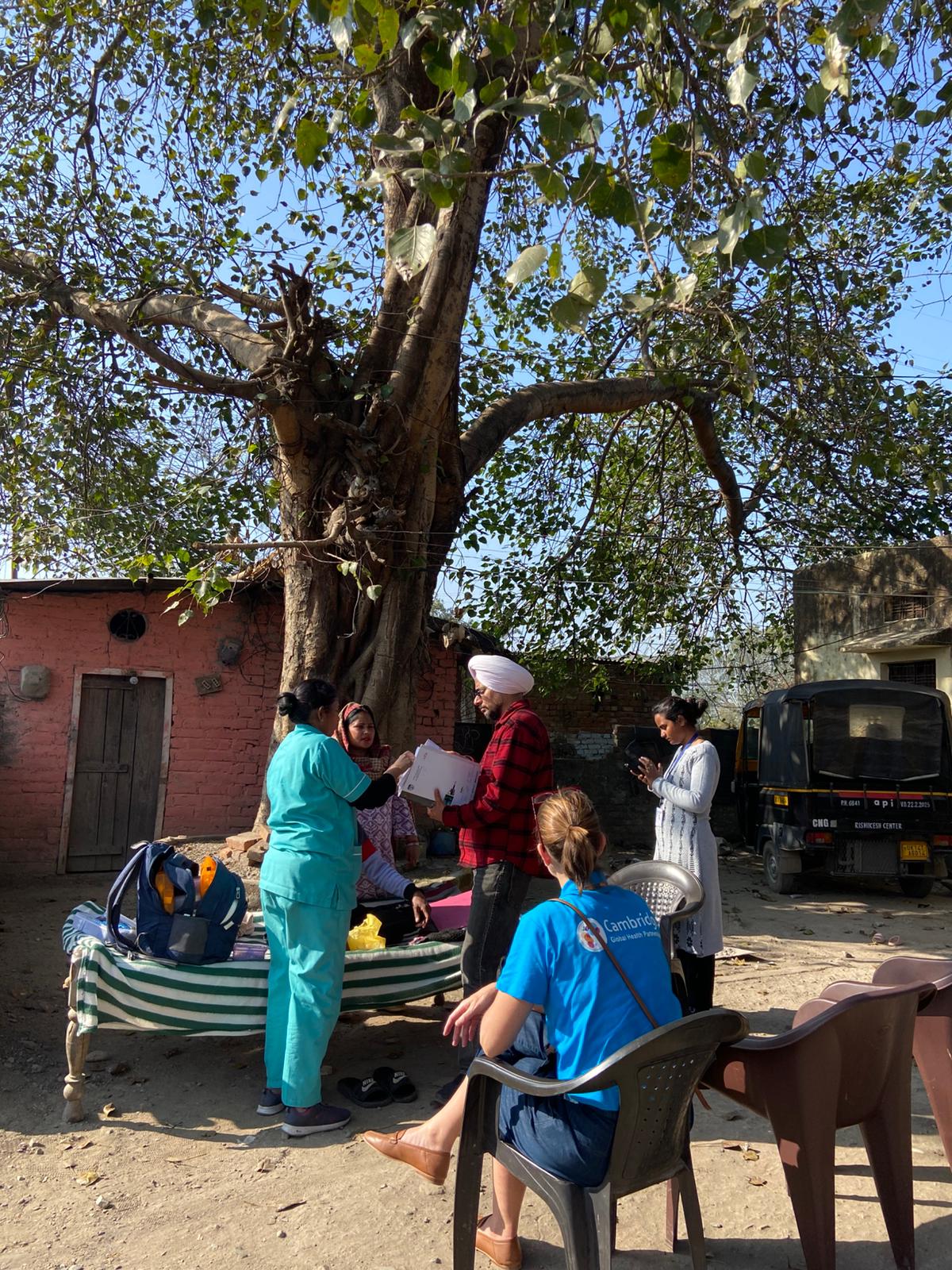
The Uttarakhand-Cambridge Health Partnership was set up between the Rama Foundation and CGHP to work on projects in the Dehradun region of North India. The aim of this partnership is to improve end of life care by bringing together multidisciplinary health professionals from the UK and India to collaborate on training, upskilling healthcare staff, and exchanging knowledge.
At the heart of this mission is empowerment. Empowering a ‘little village’ that can support people through the end of their lives.
The idea is simple – and one the Indian government is also keen to promote. Trickle-down training. Skill the professionals, who train local workers, who support families in the most rural parts of the country to care for their dying relatives at home. Spare patients a seven-hour journey on rough roads (if any) just to get help with their breathing or feeding. Supporting their nutrition, supporting their feeding, their swallow. Supporting their mobility and the moving and handling requirements that their carers will need to learn. Give families the confidence to say, ‘We can manage Pappaji at home – and we know who to call if we need help’.
It’s worth being clear about what this project is about. It was never about swooping in with all the answers, looking to overhaul the way things are done. There are already highly efficient, dedicated teams on the ground. But their work is extraordinarily demanding – often six or seven days a week, driving for hours through heat and dust, leaving early and returning after dark, to reach the patients who need them.
The value of reciprocal learning
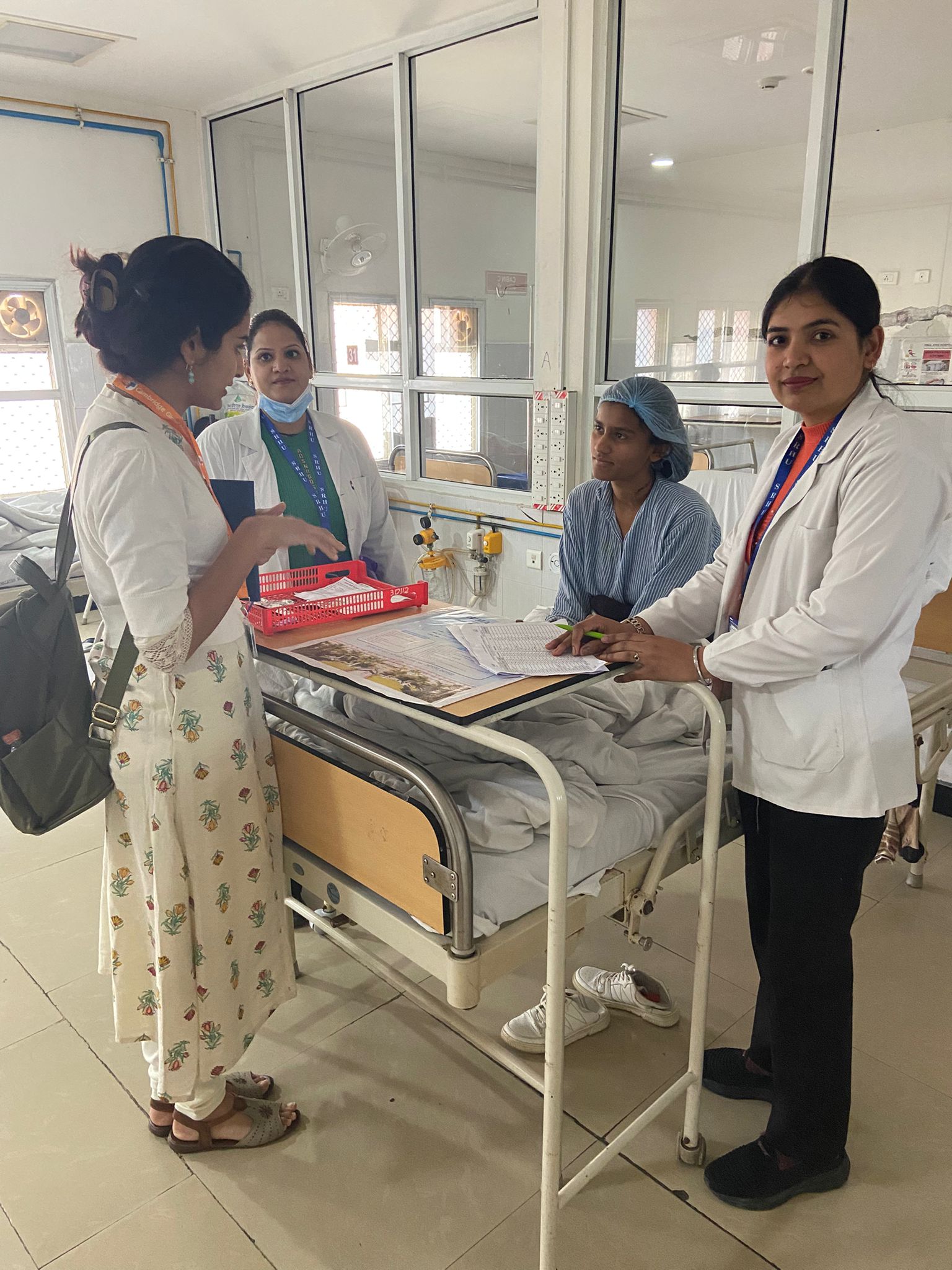
What we can offer from Cambridge may feel like a drop in the ocean. But during my visit to India alongside my supervisor CUH Occupational Therapist, Julie Burkin, we spoke with the teams about the value we could provide – and the response was overwhelming – they wanted us there. They were hungry to learn and to share. How do we manage overwhelming caseloads in the community? How do we support families through bereavement and understanding the dying process? How do we advocate and make a business case for more funding and support from our institutions and governments?
And the exchange goes both ways – there is much to learn from the way they work which would help us to shape the NHS through a challenging future ahead.
When sickness strikes, team members step in seamlessly, working across roles with the patient – and not the protocol – at the centre. The resource efficiency, using the little they have to the maximum effect. Understanding that limiting attrition of the most highly trained staff involves getting them to feel welcome and needed in the team, giving them opportunity to learn and grow. The recognition that health, like economics, works best when we think collectively.
We are gaining from their expertise in all the above (and more) and with the opportunity ahead of some of the team from India visiting us on a reciprocal visit soon in the future.
This is genuinely a bilateral partnership. There is as much to bring back from a system doing remarkable work under extraordinary pressure as there is to offer it. I keep coming back to a statement made by one of the foremost palliative care physicians in India, ‘Ultimately, the smallest thing any individual can do to help, no matter who they are, can make the biggest difference.’
—
If you’d like to make a donation to support the ongoing work of this partnership and help us continue to improve the care and quality of life for patients and their families, please get in touch with our Fundraising Lead, Hannah Wilson at hannah.wilson@cghp.org.uk
Return to blogs