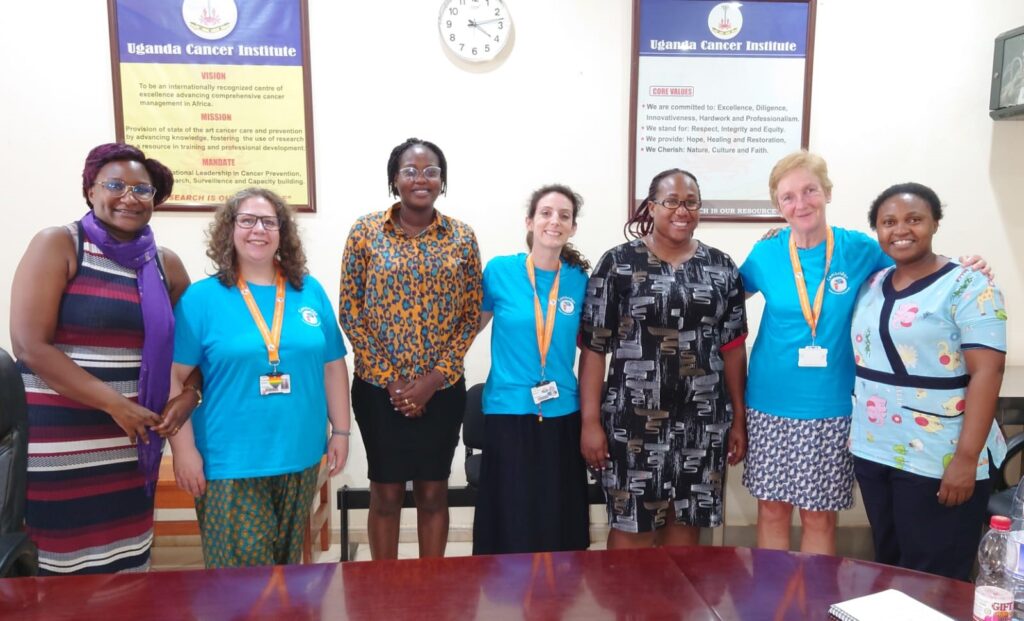
The Cambridge-Uganda Paediatric Cancer Partnership was established in 2019 with the aim to improve outcomes for children with cancer. The partnership is in collaboration with the Uganda Cancer Institute (UCI), Cambridge Africa, CRUK Cambridge Centre and the University of Cambridge Department of Pathology, with CGHP and Cambridge University Hospitals (CUH) leading health partnership work with UCI within the initiative.
With generous support from the Else Kröner Fresenius Foundation (EKFS), the partnership has entered its next phase, further strengthening clinical care, training, and research collaboration.
“The support from EKFS marks an important step forward for the partnership. This funding enables us to work closely with colleagues at UCI to translate shared priorities into action—through development of observational studies to standardise and improve outcomes for children with cancer, increase research capacity into common childhood tumours and increasing parent and caregiver education to care for these vulnerable patients.”
Gemma Barnard, Paediatric Oncology Consultant, Cambridge University Hospitals and UK Lead, Cambridge Uganda Paediatric Cancer Partnership.
Partnership goals
Each year over 400,000 children are diagnosed with cancer worldwide (1, 2). Many childhood cancers can be effectively treated with medicines, surgery and radiotherapy. However, the likelihood of surviving depends on the country you live in.
In high-income countries, more than 80% of children diagnosed with cancer recover. In contrast, in low and middle-income countries (LMICs), less than 30% survive. In Uganda, the three-year survival rate for childhood cancer is around 20% – 30%. These disparities are largely driven by avoidable factors including lack of diagnosis, misdiagnosis or delayed diagnosis, obstacles to accessing care, abandonment of treatment, death from toxicity, and relapse. (2, 3)
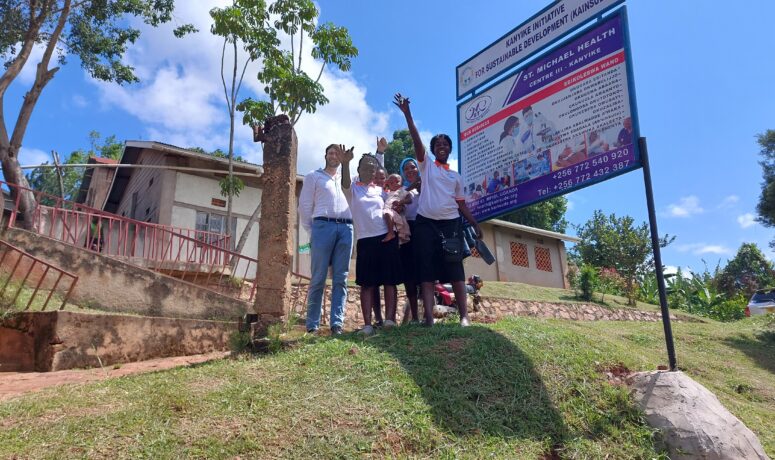
The UCI is the leading national centre for cancer treatment, research and training facility in Kampala, Uganda. Around 650 children with cancer from across Uganda and surrounding East African countries are treated at UCI each year. This partnership brings together UCI and the Paediatric Haematology and Oncology Department at Addenbrooke’s Hospital, Cambridge which delivers specialist care to children with cancer in the East of England through a ‘hub and spoke’ model with 10 paediatric oncology shared care units.
The goal of the partnership is to improve care for children with cancer, supporting the World Health Organisation’s (WHO) objective of achieving at least 60% survival for all children with cancer by 2030. To meet this goal, the partnership is focusing on:
- Establishing diagnostic and treatment pathways for children with cancer at the UCI.
- Implementing structures and processes to improve nursing competences and standardisation of practice.
- Establishing a programme of education and support for parents and caregivers of children receiving treatment at UCI.
How it works
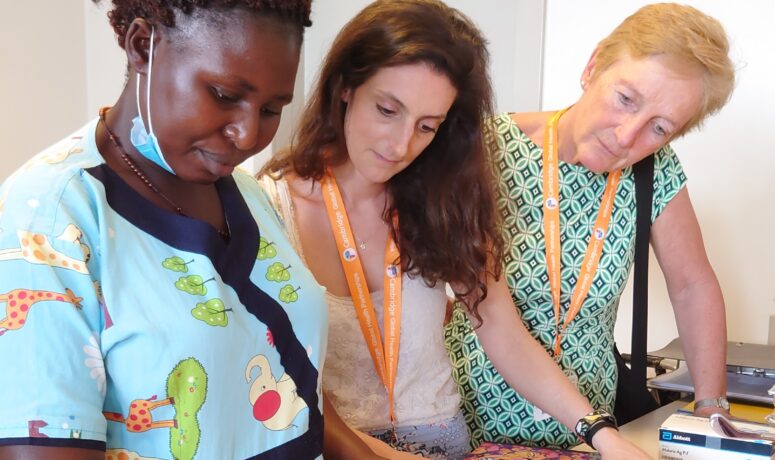
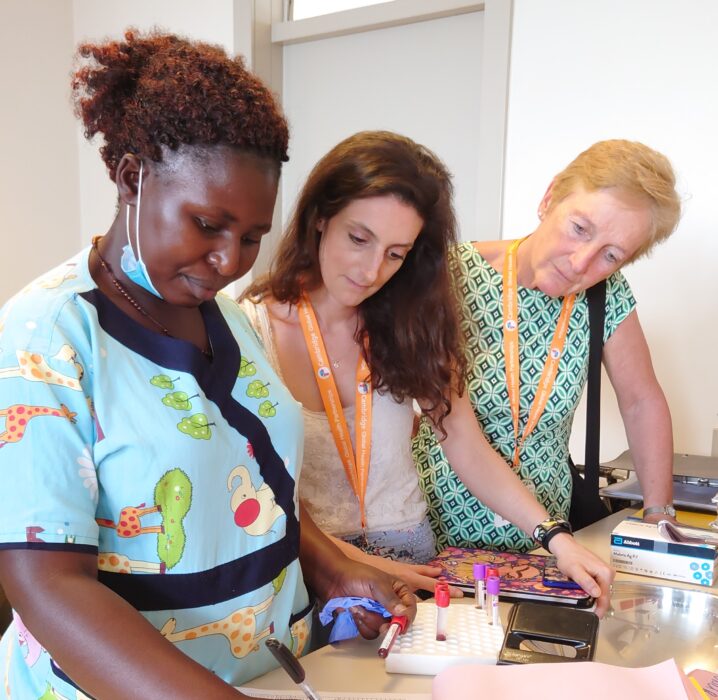
The partnership operates through a hybrid model, combining remote meetings and learning sessions with in-person visits to Uganda and the UK. It involves a multidisciplinary team of pharmacists, nurses, paediatric oncologists, haematologists and pathologists working together to develop new processes, skills and knowledge to further the project activities and to provide a forum for clinical discussion, case reporting and education.
Find out what paediatric oncology pharmacist Shauna Arao from the Uganda Cancer Institute got up to when she visited Cambridge to spend time with fellow oncology and pharmacy colleagues.
Establishing diagnostic and treatment pathways
This is about improving the safe prescription and administration of chemotherapy, for example by ensuring early treatment is given to the sickest children. Protocols also ensure that emergency treatment is time limited so that each child receives the correct treatment as soon as the diagnosis is finalised, and that chemotherapy, fluids and supportive medicine is given in the right way. To date, chemotherapy protocols have been developed to provide clear, standardised treatment pathways. In this next phase, the partnership aims to expand this work by developing individual protocols for the seven most treatable and curable tumours, ensuring a more consistent and equitable approach to care for all children.
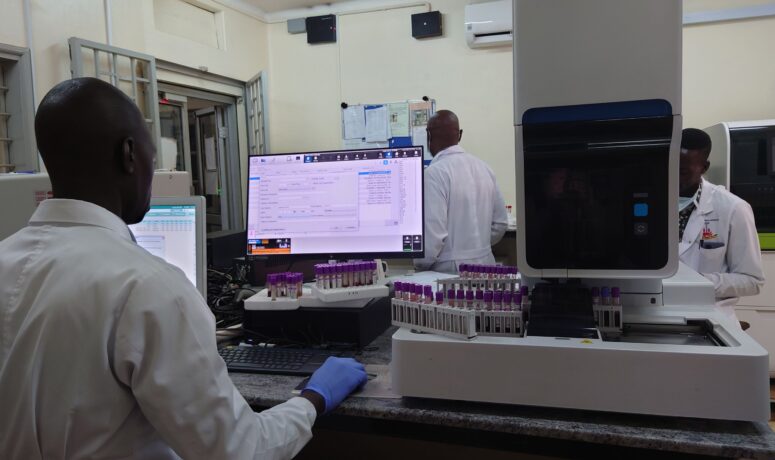
Alongside chemotherapy protocols, speeding up the diagnostic process is vital to allow children to start on the correct treatment plan as soon as possible. An important part of this is developing relationships between CUH and UCI diagnostic services, in particular between pathologists, to share learning and provide mentorship and guidance. Through these combined efforts, 650 children will have received an accurate diagnosis with appropriate treatment and supportive care plan in place.
Watch Denise Williams, Consultant Paediatric Oncologist, CUH and Co-lead of the Partnership, talk about what’s been achieved so far and the next steps.
Improving nursing competences and standardisation of practice
There is a low staff to patient ratio at UCI and resources are severely stretched. The lack of standard operating procedures and guidance in delivering best practice means care is not delivered as effectively and efficiently as possible, impacting patient outcomes. Nurses in Kampala and Cambridge are working together to develop standard operating procedures (SOPs) at UCI to help build nursing practice and promote consistency, for example in areas such as infection prevention and control and blood transfusion. Through the partnership work, 16 paediatric oncology nurses at UCI will be fully trained in treatment protocols and standardised care plans.
Programme of education and support for parents and caregivers of children with cancer
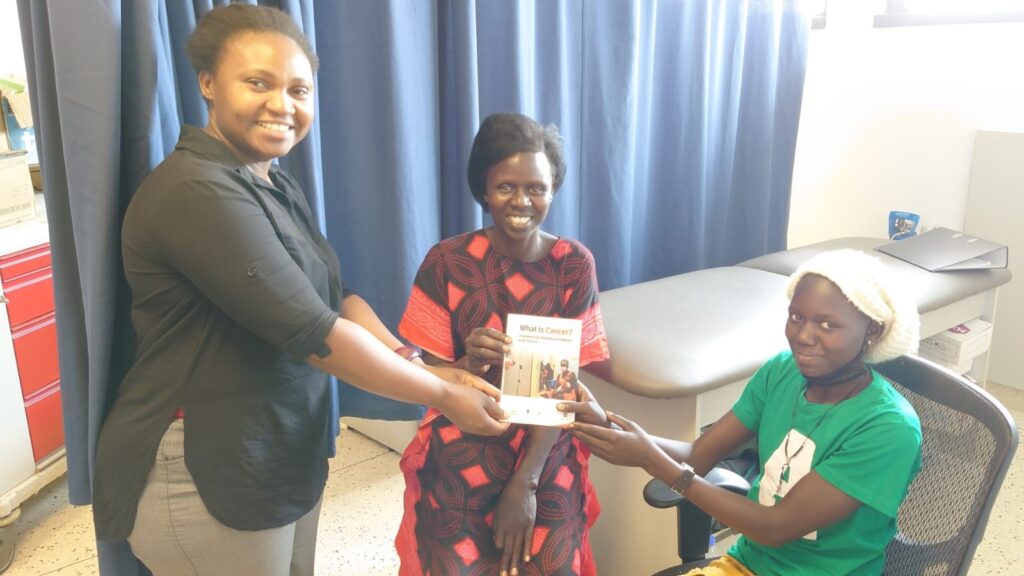
The partnership identified a lack of understanding about childhood cancer diagnoses and treatment by patients and their families as a reason for high rates of treatment abandonment at UCI. In 2023, CGHP student electives from the Cambridge University worked with the UCI team to develop the first in the series of parent information leaflets providing explanations and guidance on childhood cancer diagnosis and treatment. A second booklet focusing on different treatments for cancer and what to expect from the treatment is planned, with the goal to translate it into multiple languages spoken on the unit. The partnership aims to train 1,300 parents and care givers with new knowledge and educational materials to support children through their treatment journey.
Support the Cambridge-Uganda paediatric cancer partnership
“I hope that we can continue to build on our friendships, based on honesty and mutual respect. In turn, ensuring we get the best from each other by recognising our strengths and weaknesses, and using them to achieve our goal, irrespective of cadre. And most importantly I would like to think that we can work together in the partnership to really make a difference to the lives of children with cancer.”
Denise Williams, Paediatric Oncology Consultant, CUH and Partnership Co-lead
Continued support will help to further strengthen this partnership, building on the progress made so far and enabling us to reach even more children with life-saving care, improved treatment pathways, and better outcomes. To make a donation, please use the link below or get in touch with our Fundraising Lead, Hannah Wilson at hannah.wilson@cghp.org.uk
References:
- Steliarova-Foucher E, Colombet M, Ries LAG, et al. International incidence of childhood cancer, 2001-10: a population-based registry study. Lancet Oncol. 2017;18(6):719-731.
- World Health Organization. (2021). CureAll framework: WHO global initiative for childhood cancer: increasing access, advancing quality, saving lives. World Health Organization. https://apps.who.int/iris/handle/10665/347370
- Lam CG, Howard SC, Bouffet E, Pritchard-Jones K. Science and health for all children with cancer. Science. 2019 Mar 15;363(6432):1182-1186. doi: 10.1126/science.aaw4892. PMID: 30872518.