
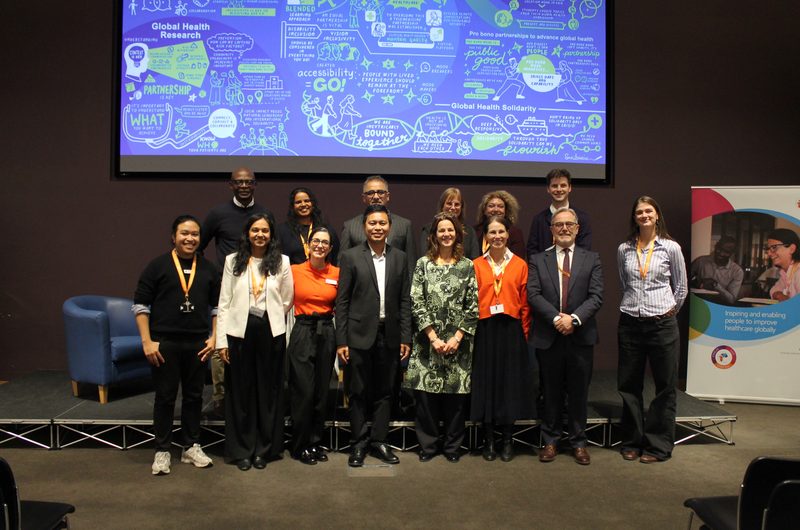
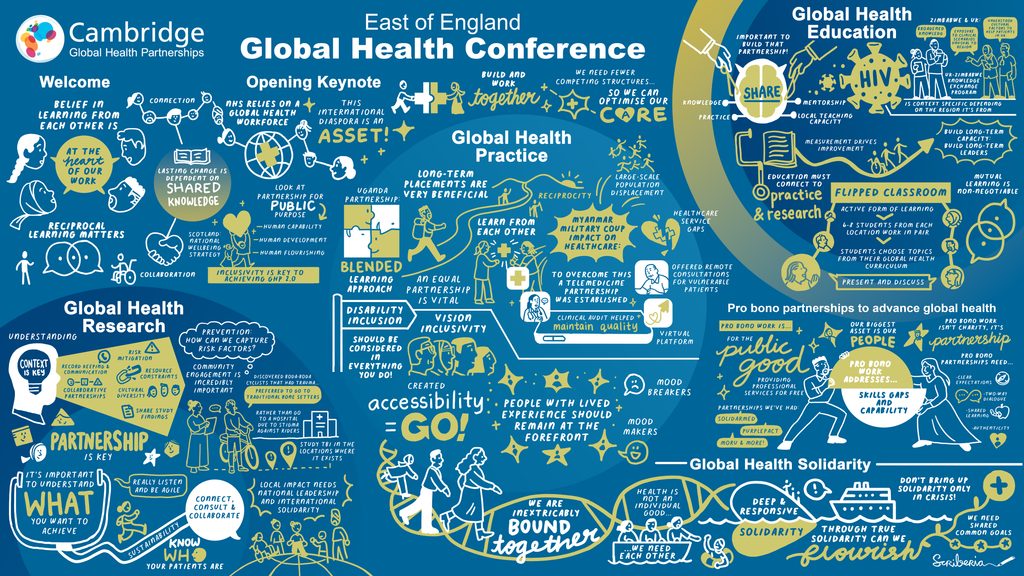
More than 150 delegates from over 40 organisations joined the 5th East of England Global Health Conference at Robinson College, Cambridge and online, bringing together expertise from across healthcare, academia, research, charities, professional bodies and international partnerships.
Sponsored by Costello Medical, the conference explored a central question: how can equitable global health partnerships deliver sustainable change in a rapidly changing world?
Across the day, a consistent message emerged: in an interconnected world, no health system has all the answers. Learning from one another through partnerships rooted in co-investment, reciprocity and deep solidarity can drive sustainable change.
The future of global health partnerships
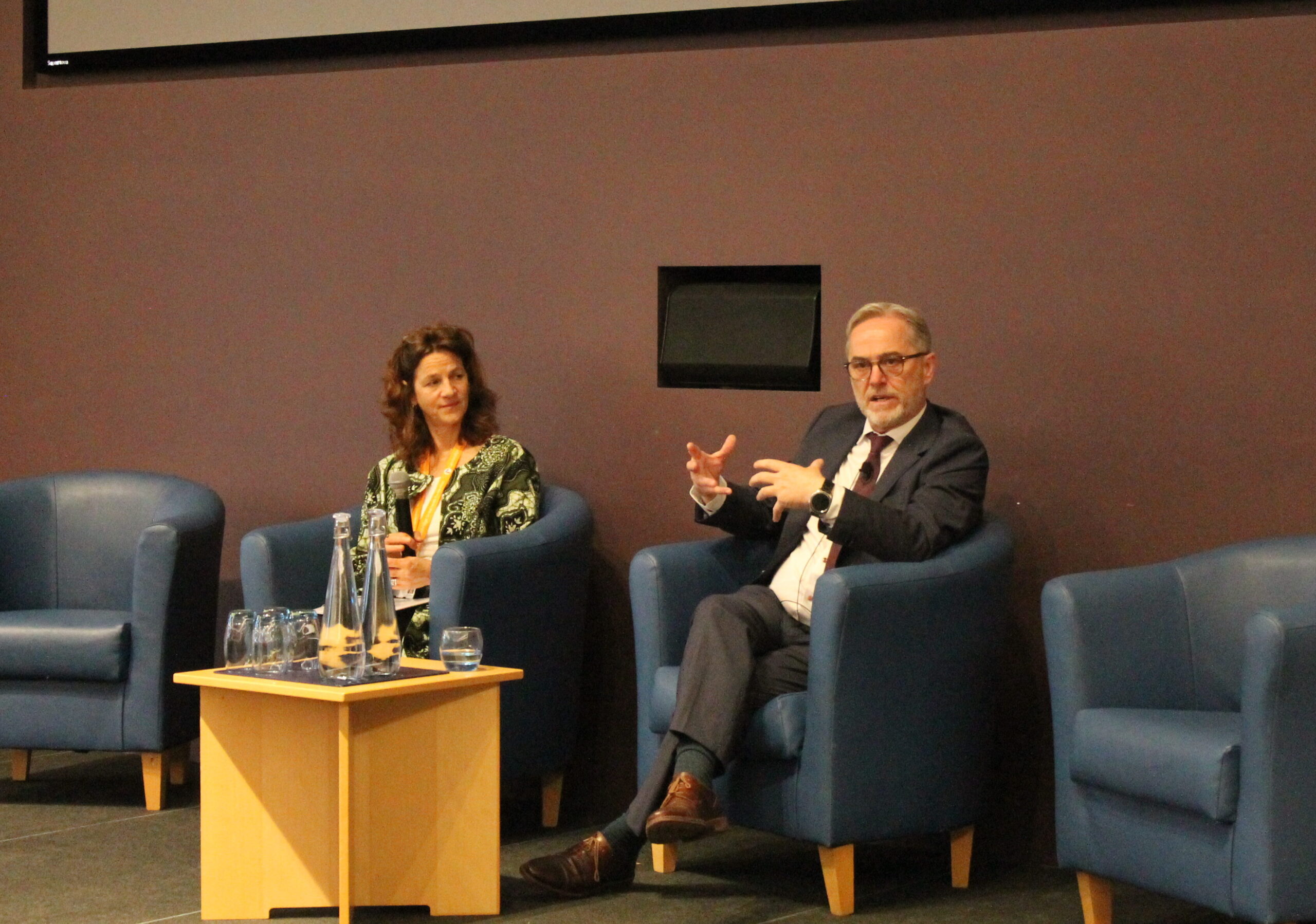
Opening the conference, Professor Jim Campbell reflected on the changing global health landscape and what that means for the future of global health partnerships.
He highlighted a shift away from traditional models in which expertise, resources and ideas are assumed to flow primarily from high-income countries. Quoting Dr Diana Atwine, Uganda’s Permanent Secretary of Health, he described a move from “osmosis”, where everything flows one way, towards an equilibrium in which “everyone has something to bring on board”.
This offers a different way of thinking about partnership: not as a transfer of expertise, but as a circular process of co-investment and mutual learning in which all partners contribute, learn and benefit.
Drawing on Scotland’s experience of taking a partnership approach to public purpose, Professor Campbell also posed a challenge for the region: could the East of England bring together its anchor institutions including hospitals, universities, research institutions, public bodies and international partners around a shared global health purpose?
The question set the tone for a day that repeatedly challenged traditional assumptions about where expertise sits and what equitable leadership in global health looks like.
Putting lived experience and reciprocal learning at the heart of equitable partnership
Across three panel sessions, speakers explored what equitable partnership looks like in global health research, practice and education.
The Global Health Research session, chaired by Professor Peter Hutchinson, demonstrated how collaborative research can generate impact well beyond academia. Daphne Karusoke explored the importance of involving communities throughout the research process; Sara Venturini shared efforts to translate traumatic brain injury research into global health policy; and Zahra Hussain reflected on strengthening health systems in conflict-affected settings.
Together, the presentations reinforced a central principle of equitable research: communities and people with lived experience are not simply participants, but partners in shaping knowledge, priorities and solutions. Meaningful engagement, local ownership and approaches grounded in context are essential if research is to translate into lasting improvements in health and health systems.
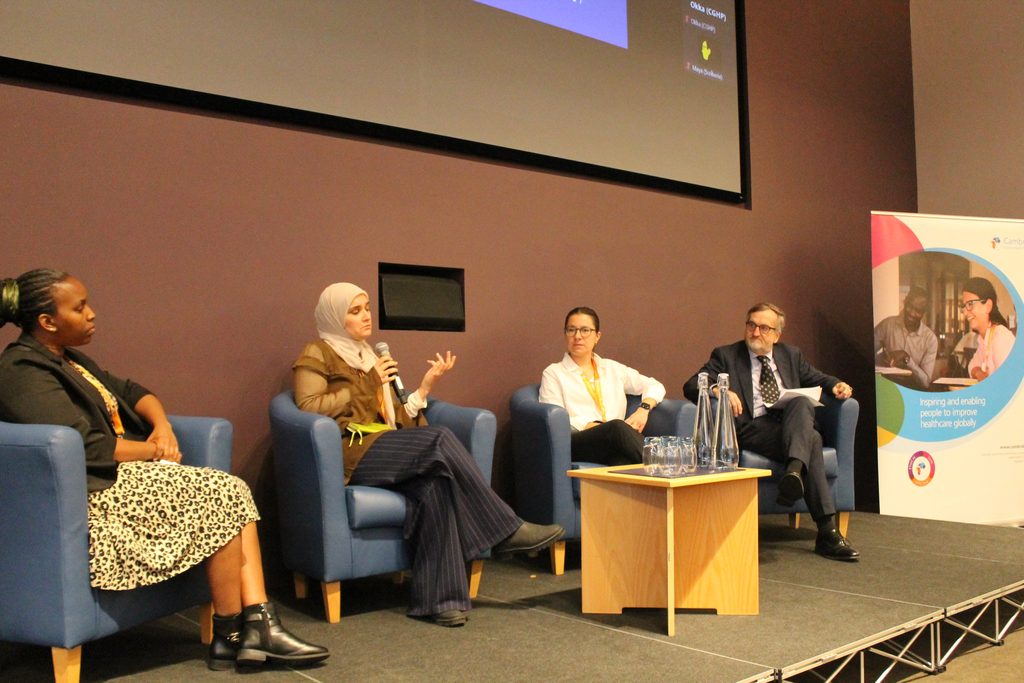
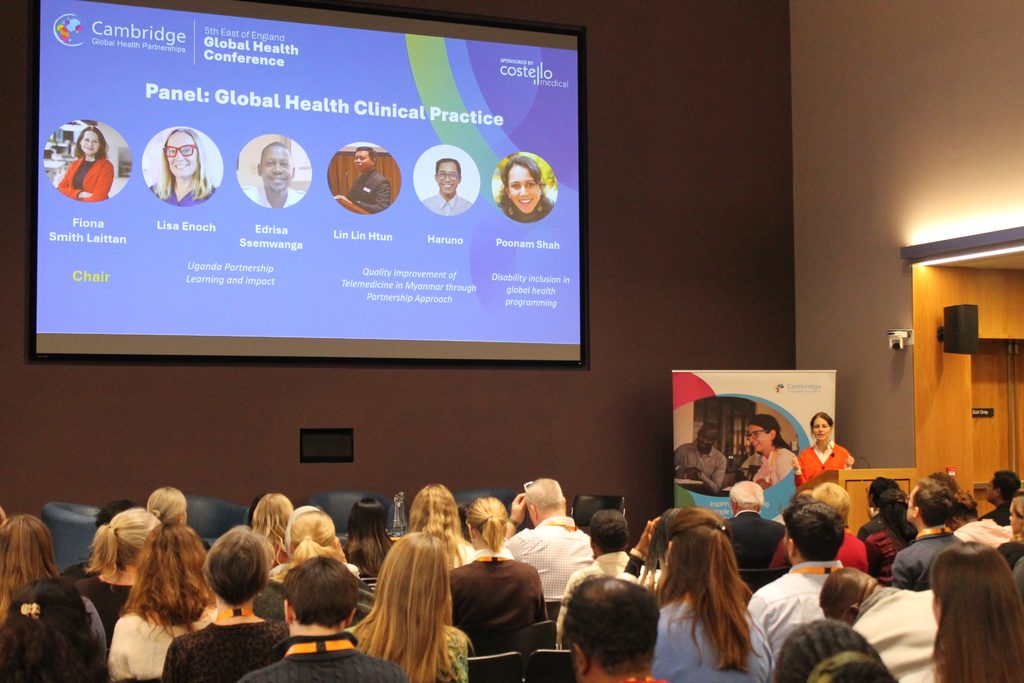
The Global Health Practice session, chaired by Fiona Smith-Laittan, explored how equitable partnerships can strengthen healthcare delivery, workforce development and health-system resilience, particularly in challenging and resource-constrained settings.
Presentations included lessons from Lisa Enoch and Edrisa Ssemwanga on a longstanding critical care nursing partnership in Uganda, Lin Lin Htun and Haruno’s work improving telemedicine quality and access in conflict-affected Myanmar, and Poonam Shah’s insights into embedding disability inclusion across health programmes.
Although the examples were very different, a common principle connected them: sustainable change cannot be achieved through technical expertise alone. It depends on trust, participation and working alongside the people and communities most affected.
The discussion also prompted reflection on the relationship between individual clinical practice and wider health-system change.
Yvonne Rose Bwikizo, a paediatric oncologist from the Uganda Cancer Institute, reflected:
“The conference was incredible and the highlight of my visit to Cambridge. It made me realise that clinical work alone is not enough, I also need to advocate for broader health-system change to achieve lasting impact.”
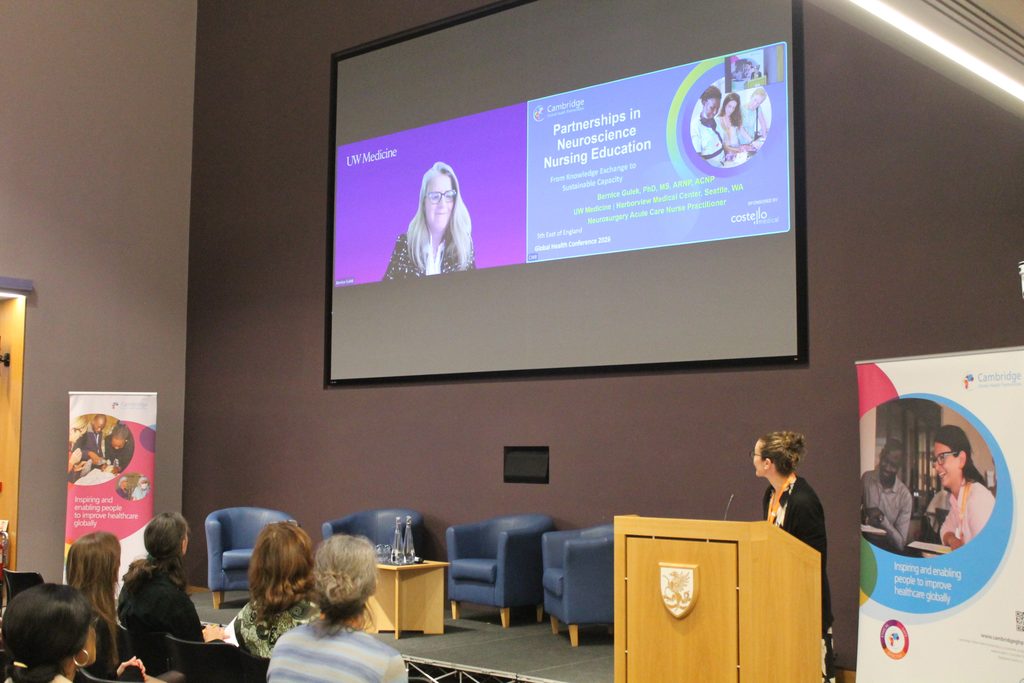
Reciprocity was equally central to the Global Health Education session, chaired by Professor Charlotte Whiffin. Bernice Gulek shared reflections from international neuroscience nursing education partnerships; Elinor Moore and Rumbidzayi Chakwesha discussed a collaborative HIV medicine programme linking Cambridge and Harare; and Arthur Hibble presented a flipped-classroom initiative connecting learners in Kenya, Ukraine and the United Kingdom.
The message was simple but powerful: in an equitable educational partnership, everyone has something to teach and everyone has something to learn.
From reciprocity to ‘deep solidarity’
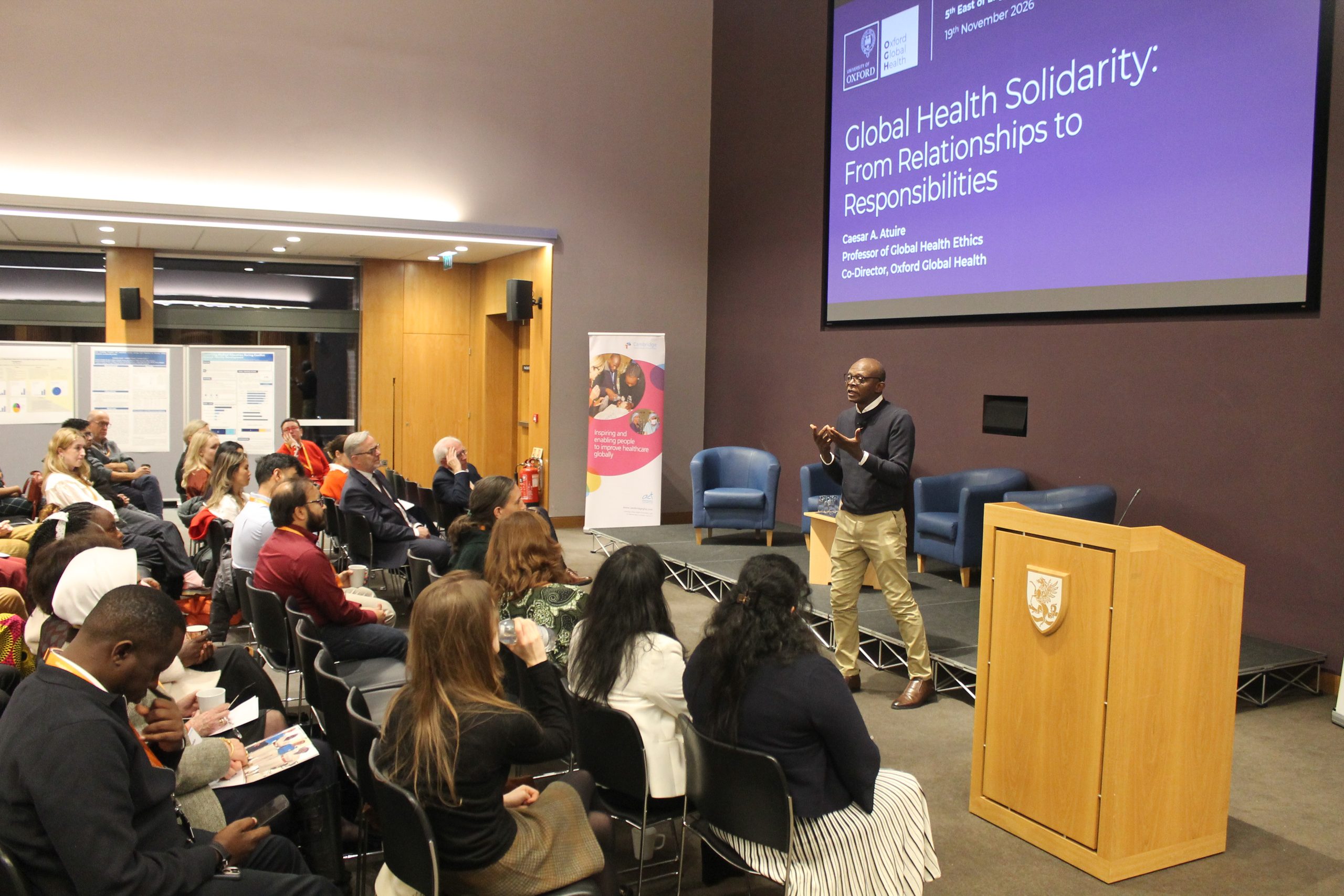
The conference concluded with reflections from Shobhana Nagaraj and a closing keynote from Caesar Atuire, Professor of Global Health Ethics and Co-Director of Global Health at the University of Oxford.
Against a backdrop of geopolitical uncertainty and weakening multilateral cooperation, Professor Atuire challenged delegates to think beyond collaboration based only on shared interests.
He argued instead for ‘deep solidarity’: recognising our responsibilities to one another and being prepared to act together even when a challenge may feel distant from our own communities.
His keynote drew together many of the ideas that had surfaced throughout the day. Reciprocity, lived experience, local ownership and equitable partnership are not simply principles for better global health programmes. They are ways of putting solidarity into practice.
“Both the opening and closing keynote were incredible talks. Provided a holistic insight into sustainable global health work.”
Connecting ideas and people across the global health community
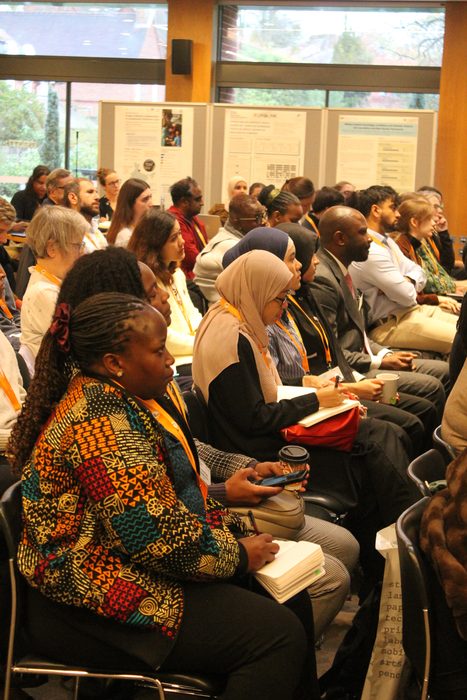
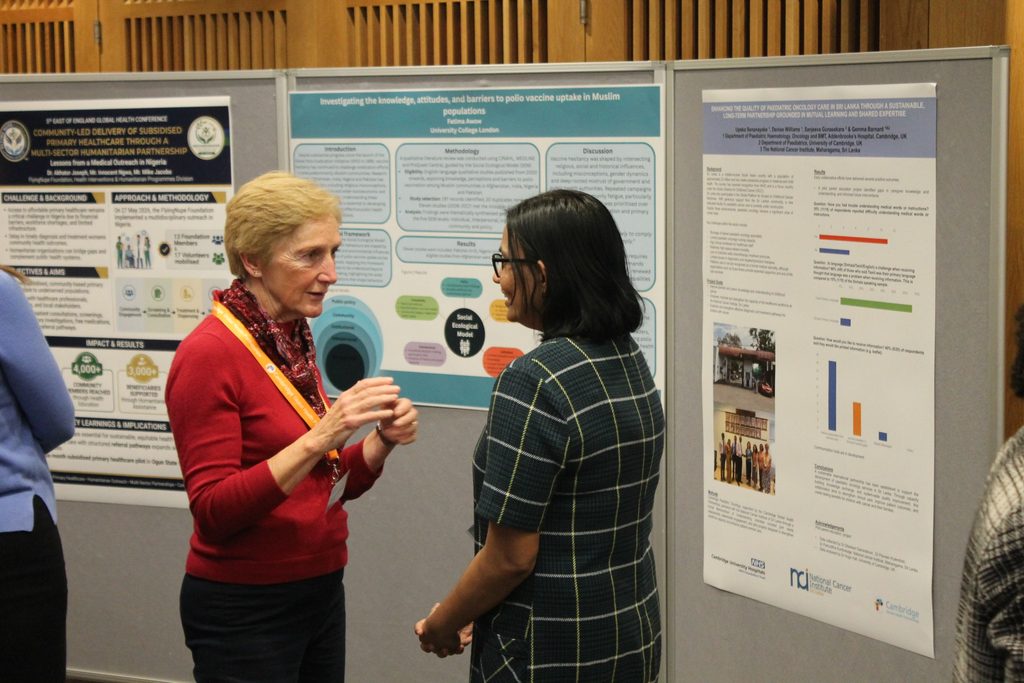
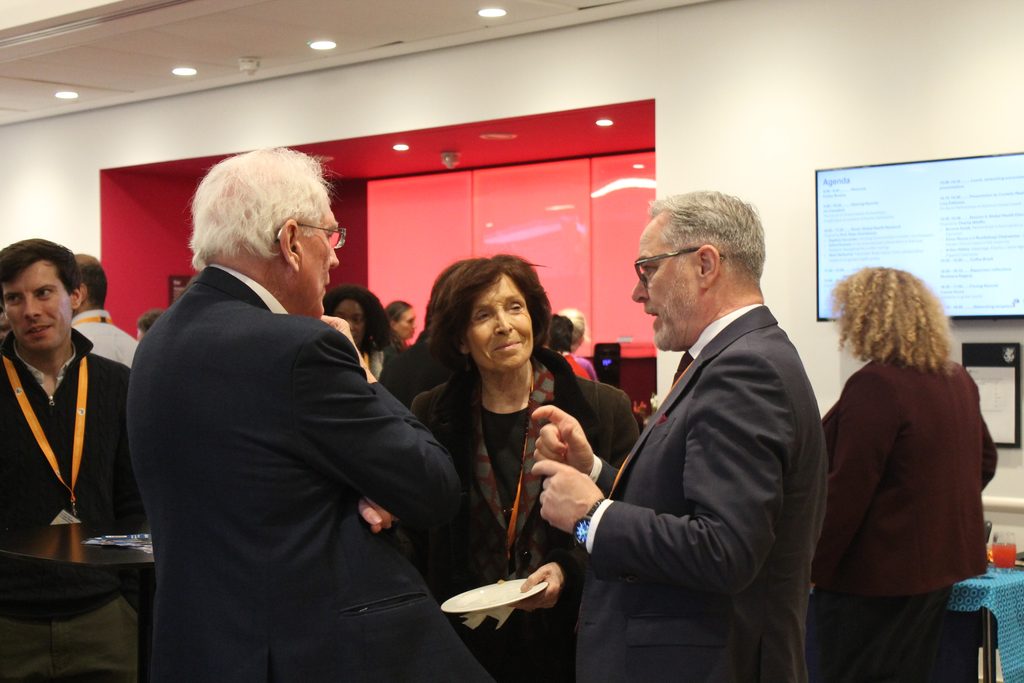
Alongside the panel sessions and keynotes, the conference showcased the breadth of global health work from across the East of England, the UK and countries around the world through a poster competition. This year’s Poster Competition attracted 85 submissions, with shortlisted contributors presenting their work during the conference. Congratulations to all of our winners and shortlisted entrants.
The conference also marked the release of CGHP’s 2025/26 Impact Report. The report brings together the experiences and learning of healthcare professionals from across the NHS and our international partners over the past year. Read the full report here: 2025/26 Impact Report.
Cambridge Global Health Partnerships thanks conference sponsor Costello Medical, alongside all speakers, panellists, poster presenters, partners and delegates who contributed to the discussions and learning throughout the day.
Find out how you can get involved in global health partnerships supported by Cambridge Global Health Partnerships: Get Involved.
Photo credit: Nicole Moosbrugger
Return to news